
Aluminium
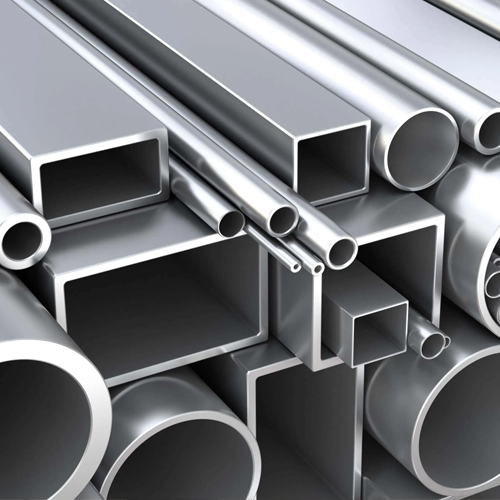
Aluminium is a lightweight, non-ferrous metal known for its excellent corrosion resistance, high strength-to-weight ratio, and good thermal and electrical conductivity. It is soft, ductile, and highly workable, making it suitable for casting, machining, extrusion, and fabrication processes. Aluminium naturally forms a protective oxide layer that enhances its resistance to rust and environmental damage. It also offers good reflectivity and is non-magnetic and non-toxic. Various grades such as commercial pure aluminium and alloyed aluminium (with elements like silicon, magnesium, copper, or zinc) are selected based on strength and application requirements.
Aluminium is widely used in automotive parts, aerospace components, electrical conductors, construction structures, packaging materials, and general engineering applications due to its durability, lightweight nature, and recyclability.
Key Points
- Very lightweight (approx. 1/3 the weight of steel).
- Excellent strength-to-weight ratio.
- Naturally forms a protective oxide layer for corrosion resistance.
- Good electrical conductivity (used in power transmission).
- High thermal conductivity (ideal for heat sinks & radiators).
- Easily machinable, weldable, and formable.
- 100% recyclable without loss of properties.
- Non-toxic and suitable for food-grade applications.
- Non-magnetic material.
- Good surface finishing options (anodizing, powder coating, polishing).
- Excellent weather resistance.
- Good performance at low temperatures.