
Hobbing Machine
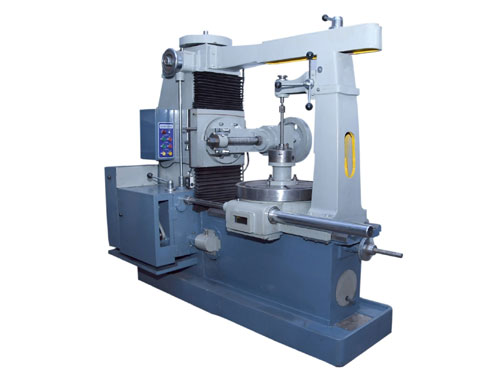
A Hobbing Machine is a precision gear-cutting machine used for manufacturing spur gears, helical gears, splines, sprockets, and worm gears. It is designed with a rigid cast iron bed and column to ensure vibration-free and accurate machining. The machine generally supports a wide range of gear diameters and modules, with variable hob spindle speeds and automatic feed control for efficient production. It features a robust work table with precise indexing mechanism, allowing accurate tooth generation through synchronized rotation of the hob cutter and workpiece.
- Maximum workpiece diameter: e.g., up to 900 mm (varies by model).
- Minimum workpiece diameter: often from small sizes depending on attachment.
- Maximum gear length / hobbed face length: depends on model design.
- Maximum module / DP: e.g., 8 Module (8 Mod) standard machines; some CNC versions up to 20–40 mm module.
- Straight & helical gear cutting support: typical machines allow helical cut angles up to ±45°.
- Smallest number of teeth: varies with machine design and gear type.
- Hob spindle speeds: ranges widely (e.g., 50–667 rpm on medium machines).
- Spindle power: from a few kW for medium machines up to > 50 kW on heavy CNC models.
- Hob spindle taper / interface: common tapers like MT (Morse Taper) or HSK/B-series on CNC.
- Hob slide (axial) travel: e.g., ~ 381 mm typical for mid-range machines.
- Table diameter: e.g., 582 mm standard on many medium machines.
- Distance between hob spindle and work table center: defined by overall machine size.